


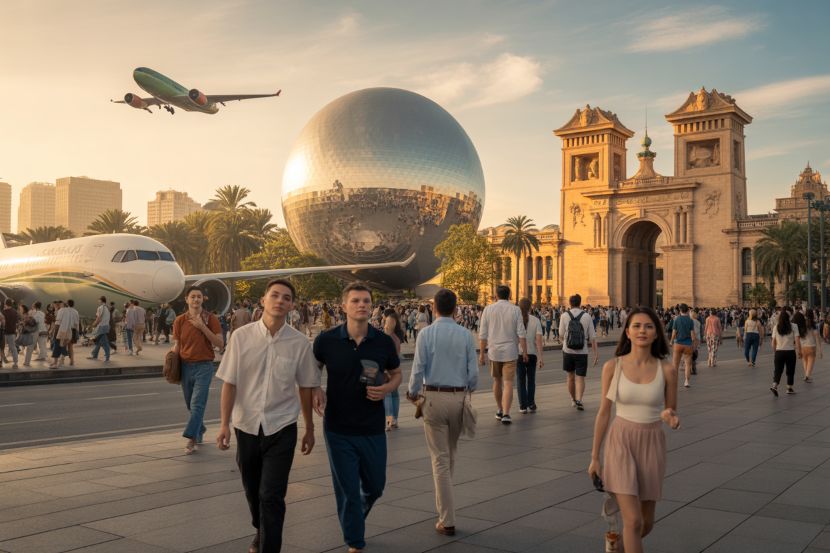
International travel is experiencing a strong upswing in 2025, marking one of the most significant rebounds for the global tourism sector in recent years. Between January and September alone, the world recorded more than 1.1 billion international travellers, which is approximately 50 million more than the same period in 2024. This represents an impressive 5% year-on-year increase, signalling a renewed appetite for cross-border travel and a stabilising global tourism landscape.
Among global regions, Africa has emerged as the strongest performer. The continent recorded an overall 10% rise in international arrivals, driven by particularly strong momentum in North Africa (11%) and Sub-Saharan Africa (10%). Destinations such as Egypt, Morocco, South Africa, and Ethiopia are attracting visitors seeking a blend of heritage, wildlife, culture, and scenic coastlines. This surge reflects a notable shift in traveller preferences, with more tourists exploring regions that were once considered niche or emerging.
In Asia-Pacific, travel activity has also picked up sharply. Airlines in the region transported 33.5 million international passengers in October 2025, representing a 10.2% increase compared to the previous year. This growth is driven by rising confidence in long-haul travel, increasing business mobility, and stronger flight connectivity between major Asian hubs. Countries across Southeast Asia and the Pacific are benefitting from this momentum, further boosting the global tourism recovery.
Europe, historically the world’s largest tourism region, continues to perform steadily. From January to September 2025, European destinations welcomed more than 625 million international visitors, reflecting approximately 4% growth over 2024 figures. Despite economic fluctuations and geopolitical uncertainties, travel demand to Europe remains remarkably resilient, supported by cultural tourism, city breaks, and improved intra-European mobility.
On a destination level, several countries are outpacing global averages. Brazil, Vietnam, and Egypt have been identified as some of the fastest-growing tourism markets of 2025. Their performance highlights travellers’ growing interest in diverse cultural, adventure, and nature-driven tourism experiences.
The upward trend in tourism is particularly notable given ongoing global challenges, including inflation, shifting exchange rates, and geopolitical tensions. Yet travellers worldwide continue to prioritise exploration and cross-border experiences, underscoring the sector’s strong resilience. Industry experts attribute the revival to pent-up demand, expanded air connectivity, and the reopening of long-haul travel corridors.
As 2025 progresses, the sustained rise in global mobility is expected to shape new opportunities for travel, hospitality, aviation, and the international events and MICE sector. With travellers increasingly seeking authentic, immersive, and unexplored destinations, countries investing in tourism infrastructure and experience-driven offerings are likely to capture the next wave of global travel growth.