

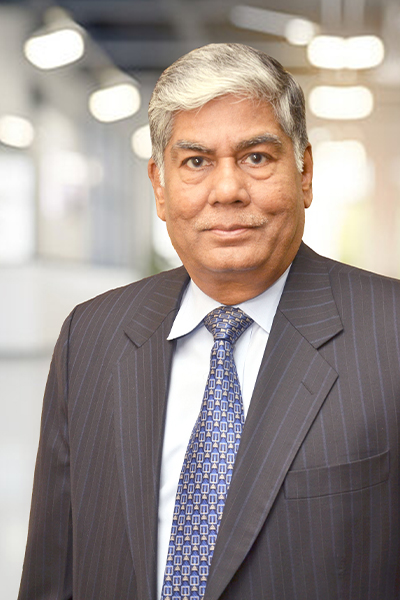
TMS. Mr. Kalantri, you have had a long and illustrious career in industry, trade promotion, and infrastructure development. What core values have guided your leadership journey?
Vijay Kalantri. I joined World Trade Centre, Mumbai in the year 1983 as a member of council. Back then, I had the fortune of working with the stalwarts of that time. Some of mentors and colleagues like Late Shri Sheshrao Wankhede, Keshub Mahindra and Kamal Moraka during whose tenure I was Vice Chairman, I had the opportunity to learn something from each one of them. This has shaped my perspectives towards trade promotion and social service significantly. Over the years, every role which I took from an industrialist to the head of a prestigious organization like World Trade Centre, Mumbai I have been guided by some values I have learnt in my journey. Some of them are integrity, credibility, honesty and a desire to do something impactful in the society. These values have pushed me to take challenging and often difficult roles. However, over the years I have learnt that no role, no job and no business is impossible if you have willingness to do it and ready to work hard for it.
Since I started, my only effort has been to strengthen platforms such as World Trade Centre Mumbai, All India Association of Industries and various bilateral forums so that they can outlast any one person and continue serving industry, MSMEs and start ups. When institutions are strong, they can consistently support exporters, attract investment, and provide policy feedback regardless of political or economic cycles.
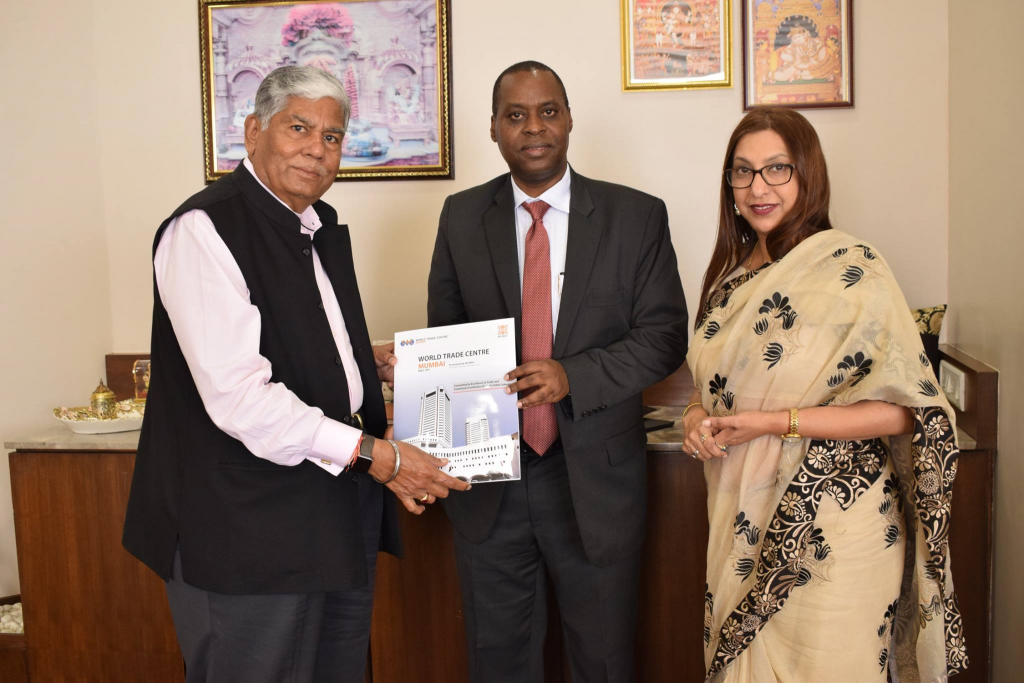
Another guiding value is inclusiveness – especially the empowerment of MSMEs, women entrepreneurs and young founders. As a businessman, I am inspired by the legendary M. Visvesvaraya, whose vision has made this institution. Our flagship events like the World Trade Expo are consciously designed and structured in such a fashion that a small entrepreneur from a tier II or tier III city can sit across the table with a foreign trade mission and explore partnerships on an equal footing – exactly what Shri M. Visvesvaraya dreamt of. This inclusive approach ensures that globalization does not benefit only a few large players but creates broad based prosperity and jobs across regions and sectors.
Finally, I have a strong belief in constructive engagement between industry and government, no matter what the situation is. Dialogue is the only way out, that’s my mantra. While serving on advisory boards, export and MSME committees and working closely with policymakers, my constant endeavour has been to present industry’s concerns in a solution oriented manner and to help design frameworks—such as the recent Export Promotion Mission—that genuinely improve the ease of doing business and export readiness. Leadership, I feel, is not a position, but a responsibility which you partake gor the good of the society.
TMS. WTC Mumbai has hosted several bilateral trade missions and summits this year. How important are these forums for expanding India’s export and investment footprints?
Vijay Kalantri. This year we have completed 55 years in service to the nation. Throughout all these years, we have endeavoured to build a consistent legacy, surpassing previous years. In light of that, World Trade Centre, Mumbai and All India Association of Industries organized the 10th Global economic Summit, 6th World Trade Expo and WTCA Asia Pacific Conference which saw participation of more than 600 delegates, 30 ambassadors and Consulates, more than 200 business executives and over 6000 visitors in span of just 2 days. These events attended by ministers, policymakers and academics have acted as a catalyst in attracting trade and investment opportunities in the state as well as country. Our focus here at World Trade Centre, Mumbai remains to create a platform for dialogue between policy makers and the wider trade community.
Events like National MSME Roundtable Conference is testament to our efforts wherein senior bureaucrats came to listen to the grievances of MSME associations. Moreover, Bilateral trade missions, visiting business delegations, roundtables and similar platforms hosted at WTC Mumbai have become powerful instruments for expanding India’s export basket, diversifying markets and attracting quality investments. They bring together foreign trade missions, diplomats, overseas chambers, Indian MSMEs, start ups and large companies on one neutral platform, making it possible to convert conversations into concrete partnerships, JVs, technology transfers and market access within a short span. In the past quarter only, we have hosted trade delegations from basket of countries like Russia, Brazil, Argentina, Cyprus, Kenya, Sri Lanka and many more.
Such forums are especially critical at a time when India is deepening its integration into global value chains and simultaneously facing new tariff and non tariff challenges in key markets. Initiatives like the Export Promotion Mission and targeted outreach to multiple countries will only succeed if they are complemented by ground level engagement platforms where buyers, sellers, financiers and policymakers can meet physically, build trust, and understand each other’s regulatory and logistical requirements. In this context, WTC Mumbai’s role as a bridge between diplomatic missions, government agencies and industry – particularly MSMEs – becomes even more important. Equally, these summits and expos have a strong knowledge and capacity building dimension. Country presentations, sectoral sessions, training programmes and one to one B2B, B2G meetings help Indian enterprises—especially first time exporters—understand standards, sustainability requirements, digital trade norms and financing options in overseas markets. Over time, this ecosystem approach creates a pipeline of export ready companies and de risks India’s external sector by spreading trade across more regions, products and partners.
TMS. What are the key program and partnerships WTC is Mumbai for 2026 to accelerate trade, export diversification, and foreign investor engagement?
Vijay Kalantri. Just as I said, every year we try to build on the legacy of the previous year. Even before we stepped in the new year, WTC Mumbai had scheduled summits, programs and events which will further our goal of connecting business globally. Starting from January, we will host a Vintage Car Exhibition where for the first time, all 7 Rolls Royce Phantom cars along with hundreds of others precious vintage four wheelers will hit the WTC tarmac attracting footfall and car enthusiasts. In the coming months we will also be hosting Hon. Finance Minister Smt. Nirmala Sitharaman for the Finance and Innovation Summit in association with The Pioneer. Subsequently, we have planned a special summit on Defense Exports, Manufacturing and capabilities to strengthen our defense infrastructure and capabilities where we will highlight the innovation readiness of defense startups connecting them not only with potential buyers but also with investors, venture capitalists’ and corporate to integrate them in the defence economy.
With an average of 100 events and outreach program every year here at World Trade Centre, Mumbai, every other day you will find us working to accelerate trade, export diversification, and foreign investor engagement. I am hopeful that 2026 will be no different than this.
TMS. What advice would you give to young leaders seeking to make an impact on trade, industry and institutional leadership?
Vijay Kalantri. For young leaders who wish to make an impact in trade, industry and institutional leadership, three messages are particularly important. First, build depth, not just visibility: understand trade policy, logistics, finance, technology and geopolitics in detail, because decisions in this space have long term implications for competitiveness and employment. Those who combine knowledge with integrity and reliability will always be trusted by both government and industry, regardless of changing economic cycles.
Second, think globally but act locally. Engage with international partners, attend trade missions and exhibitions, and leverage platforms like WTCs and industry associations, but always stay rooted in the needs of your region, your MSMEs and your workers. Real leadership lies in translating global opportunities into local jobs, technology absorption, and sustainable value creation.
Third, invest in institutions and teams. Whether one is leading a company, a port, an association or a trade centre, the true legacy is the quality of the institution left behind. Create systems, nurture young professionals, encourage ethical conduct and innovation, and remember that in trade and industry, trust is the most valuable currency – it takes years to build and only moments to lose.